
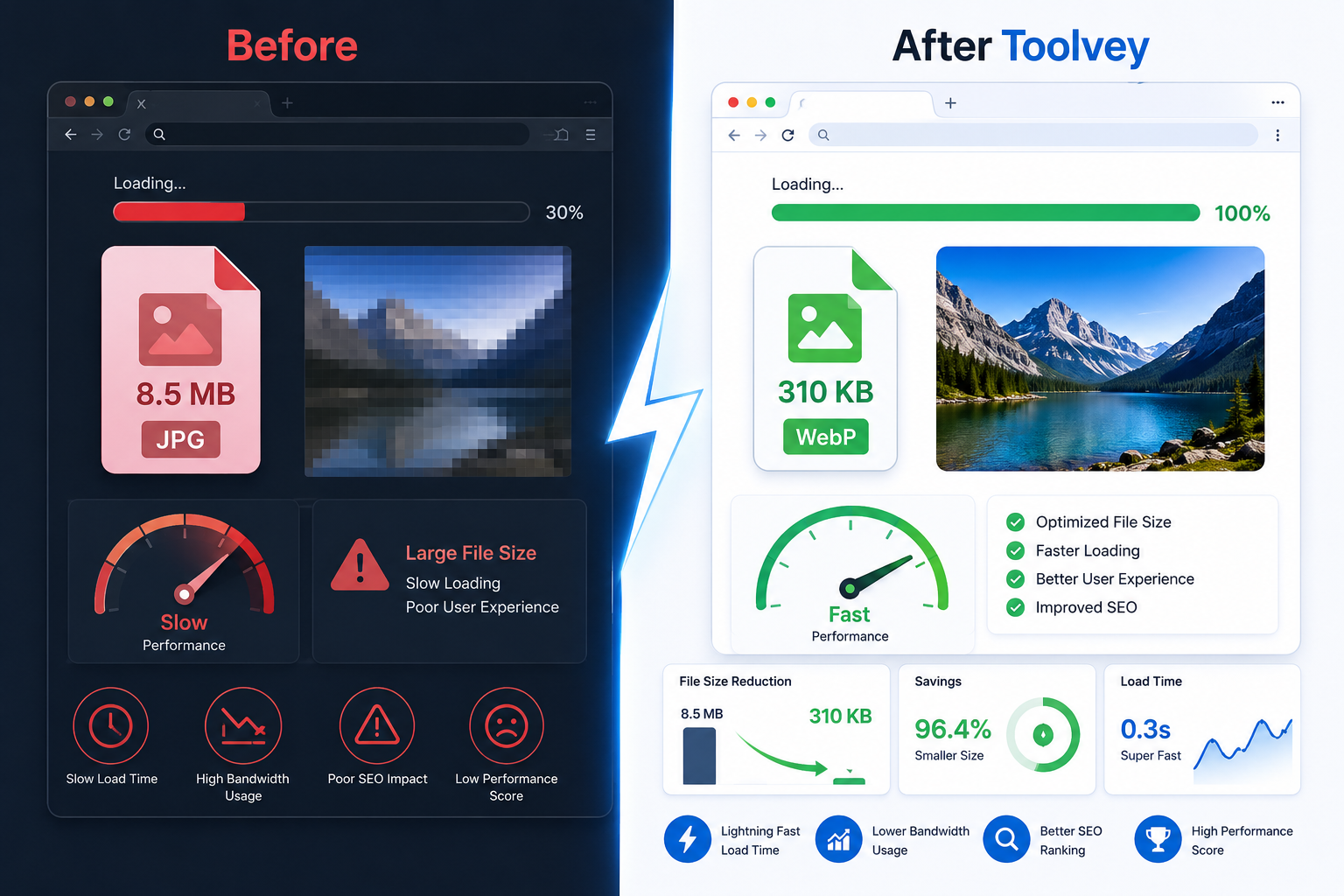
In today’s fast-loading, visually-driven web, the images on your website can either be your biggest asset — or your slowest liability. Most website owners obsess over content and design but completely ignore one silent killer of traffic: unoptimized images.
This is where smart web tools step in, and specifically, image optimizing tools have become an absolute necessity for anyone serious about web performance and search rankings.
Why Image Optimization Matters More Than You Think
Every second counts online. Research consistently shows that a one-second delay in page load time can drop conversions by up to 7%. Images typically make up over 60% of a webpage’s total size. That means a single high-resolution photo you upload without optimization could be silently costing you visitors, rankings, and revenue.
Google’s Core Web Vitals — now a direct ranking factor — specifically measure how fast your visual content loads. Unoptimized images fail these metrics every single time.
The solution is not to use fewer images. The solution is to optimize every image intelligently before it goes live.
What Do Image Optimizing Tools Actually Do?
Many beginners think image optimization simply means making a file smaller. In reality, professional-grade tools handle a much deeper process:
- Compression without quality loss — strips unnecessary metadata and embedded data, reducing file size by 40–80% with zero visible difference.
- Format conversion — modern formats like WebP deliver the same quality at nearly half the size of traditional JPEGs and PNGs.
- Dimension resizing — ensures you are not serving a 4000px wide image to a mobile screen that only displays 400px.
- Bulk processing — saves hours of manual work when managing a content-heavy website or ecommerce store.
Choosing the Right Tool for the Job
Not all image optimizers are built equally. The best image optimizing tools combine ease of use with powerful backend processing — so you do not need to be a developer to get professional results.
When evaluating any tool, look for these key capabilities:
- Lossless and lossy compression options
- Support for JPG, PNG, WebP, SVG, and GIF formats
- Batch upload functionality
- Preview comparison before downloading
- No mandatory software installation (browser-based is ideal)
How Image Optimization Directly Impacts SEO
The connection between image optimization and search rankings is direct and measurable:
- Page speed scores improve immediately when image sizes drop. Google PageSpeed Insights rewards optimized images with higher scores — and higher scores mean better rankings.
- Bounce rate decreases because visitors stop leaving before your page finishes loading. Faster pages keep users engaged.
- Crawl efficiency increases because search engine bots can index your pages faster with less data to process.
- Mobile rankings improve since Google uses mobile-first indexing. Images optimized for mobile delivery give you a genuine competitive edge.
A Simple Optimization Workflow for Any Website Owner
You do not need a complicated system. Here is a practical workflow that works:
- Before uploading any image, run it through a reliable image optimizer. Choose compression level based on image type — photographs handle lossy compression well; logos with text need lossless.
- Convert to WebP wherever your platform supports it. WordPress, Shopify, and most modern CMS platforms now handle WebP natively.
- Always add descriptive alt text to every image after uploading. Alt text is a direct on-page SEO signal that tells search engines what your image represents.
- Use lazy loading so images below the fold only load when a visitor scrolls to them. This dramatically improves initial page load time.
Final Thoughts
Web tools have democratized professional-level website management. Tasks that once required a developer and specialized software can now be done in seconds through a browser. Among all the categories of web tools available today, image optimization stands out as one of the highest-return investments of your time.
A faster website earns more trust, ranks higher, and converts better. If you have not made image optimization a standard part of your publishing workflow yet, start today. The performance gains are immediate, measurable, and lasting.